Floral Botanicals
Chamomile, linden blossom, and elderflower offer delicate aromatic profiles. Typically steeped at moderate temperatures to preserve volatile compounds.
A curated reference of botanical ingredients commonly used in home herbal tea preparation. Each profile covers sensory characteristics, typical proportions, and practical handling notes.
Chamomile, linden blossom, and elderflower offer delicate aromatic profiles. Typically steeped at moderate temperatures to preserve volatile compounds.
Peppermint, lemon balm, and nettle leaves provide structure to blends. Leaf density affects how much material fits in a standard teaspoon measure.
Ginger root, cinnamon bark, and licorice root require longer extraction times. Pre-cutting into smaller pieces improves water contact during steeping.
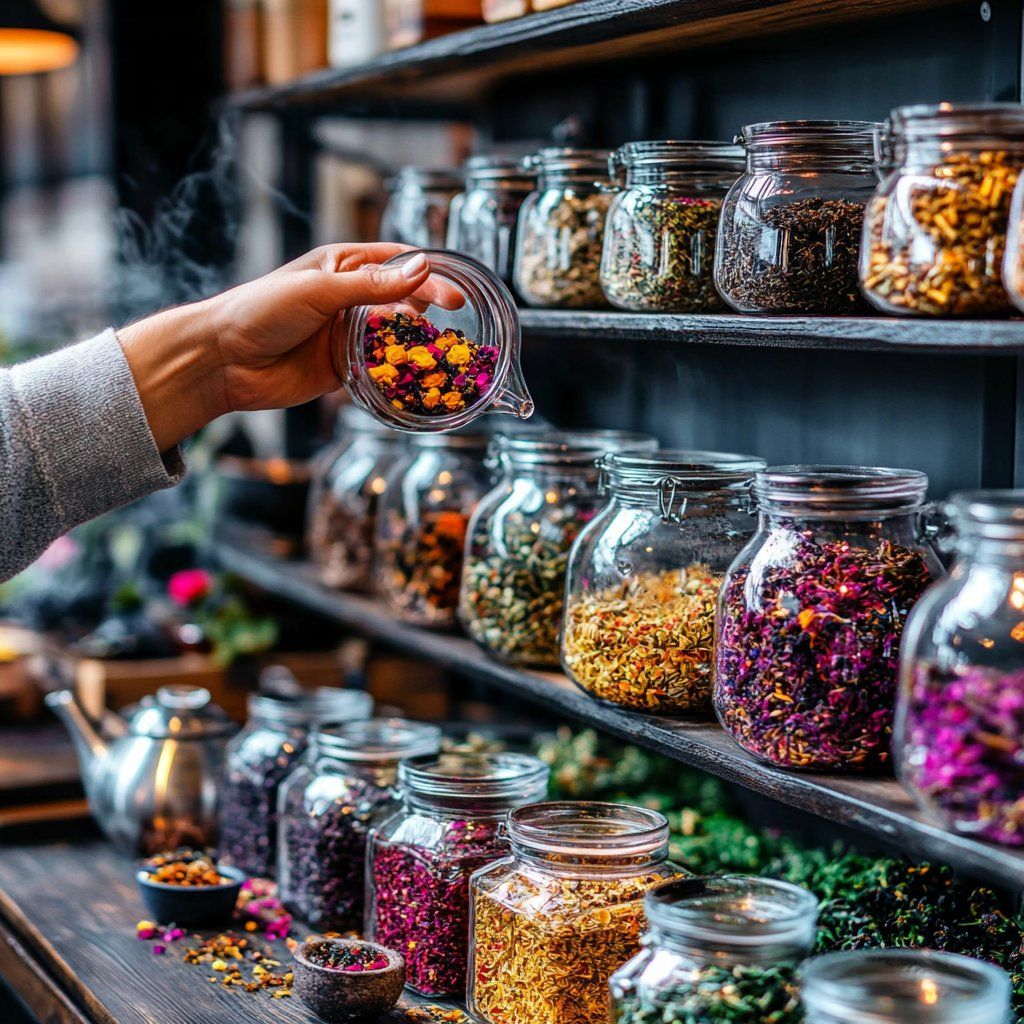
Proper storage extends the aromatic life of dried botanicals. Most herbs retain acceptable flavor for six to twelve months when kept away from light, moisture, and temperature fluctuations.
Use these combinations as starting points when designing your own blends.
Chamomile + Honey
Soft floral with natural sweetness
Mint + Lemon Peel
Bright, refreshing contrast
Ginger + Cinnamon
Warm spice foundation
Rosehip + Hibiscus
Tart, ruby-colored infusion
Lavender + Earl Grey
Aromatic layered complexity
Nettle + Apple Mint
Earthy green with cool finish
Chamomile and yarrow grow abundantly in southern Sweden. Foraging requires landowner permission and accurate plant identification skills.
Sea buckthorn and wild thyme appear along shorelines. Their concentrated flavors suit small-quantity blending.
Bilberry leaves and birch sap offer distinctive Nordic character when used sparingly in infusion recipes.
Hang small herb bundles upside down in a ventilated room. Most leafy herbs dry within seven to ten days depending on humidity levels.
Set temperature between 35–45°C for flowers and 45–55°C for roots. Even airflow prevents mold development during the drying cycle.
Herbs should crumble easily when fully dry. Any remaining flexibility indicates moisture content that could compromise long-term storage.
Herbal ingredients are commonly used in home kitchens, yet individual sensitivities vary. Our profiles describe flavor, aroma, and preparation properties only. They do not assess suitability for any person or circumstance.
If you take prescribed medicines or follow a restricted diet, speak with a qualified professional before trying unfamiliar botanical ingredients. Bonebios does not evaluate herbs for any purpose beyond culinary education.
Never consume foraged plants without confident identification. Many edible herbs have toxic lookalikes. When uncertain, purchase from reputable dried herb suppliers.
Apply your herb knowledge to complete infusion recipes with measured proportions and steeping instructions.
View Tea RecipesRequest a personalized educational plan tailored to herbs available in your region and your flavor preferences.
Contact UsBotanical descriptions on this page refer to sensory qualities and kitchen handling. They are not evaluations of safety, nutrition, or suitability for specific individuals. Always purchase herbs from reputable suppliers and verify plant identification before consumption.
Pair your herb knowledge with our step-by-step recipe guides for consistent, enjoyable infusions.
Explore Recipes